
Many founders picture their logo on a hangtag long before they picture the fabric rolls, the sewing lines and the quality checks that get a garment there. That gap between the idea and the factory floor is exactly where working with an established garment factory becomes useful, because it lets a new brand focus on design and marketing while a manufacturer handles the technical side of turning a concept into a finished product.
For founders comparing sourcing countries, Vietnam often comes up because of its combination of manufacturing experience, fabric availability and reasonable production costs. This guide walks through what private label clothing production actually involves, what a new brand should prepare in advance, and how to avoid the mistakes that most often slow first-time orders down.
Understanding Private Label Production and Why New Brands Choose It
Before going further, it is useful to separate private label from other manufacturing models it often gets confused with. Private label production means a factory manufactures a product using largely standard patterns, fabrics or block styles, then finishes it under the brand’s own label, packaging and branding. It is a middle path: faster and less expensive than fully custom development, but more distinctive than reselling an unmodified stock item. For a new brand with a limited budget and no in-house pattern-making team, this middle path is often the most realistic starting point.
Setting up an in-house cutting and sewing operation requires capital, staff and space that most early-stage brands simply do not have yet. Working with a manufacturer instead means the brand can launch with lower fixed costs and adjust the collection based on real sales data once demand is confirmed. The brand also gains access to machinery and finishing techniques that would not make financial sense to purchase for one product line alone.
Step 1: Define Your Product Concept and Target Customer
A surprising number of first orders go wrong simply because the brand had not yet decided what it was actually trying to make. Even a simple slide with reference photos, target fabric weight, and a price range gives a factory enough to start responding meaningfully. Manufacturers can offer far more useful advice when they understand the intended customer and price bracket, rather than being asked to “quote a t-shirt” with no other context.
Step 2: Prepare a Tech Pack Before Reaching Out
A tech pack is the technical document that describes a garment in enough detail for a factory to produce it accurately: measurements, construction details, fabric specification, trims and artwork placement. Brands that arrive with even a basic tech pack tend to get through sampling faster, simply because there is less back-and-forth guessing involved. It does not need to be a professional-grade file from day one, but the more specific it is, the fewer surprises appear at the sampling stage.
Step 3: Understand MOQ, Sampling Cost and Lead Time
Minimum order quantity, sample cost and production lead time are the three numbers that shape almost every early conversation with a factory, and they vary significantly by manufacturer, fabric and garment complexity. A factory that focuses on bulk fashion basics may have a much higher MOQ than one that specializes in smaller private label runs, so it is worth asking directly rather than assuming a standard number applies across the industry. Lead time should also be discussed honestly, including how it changes during peak seasons, so that launch timelines are realistic rather than optimistic.
Payment structure is another practical detail that new brands often overlook until they are already mid-negotiation. Most manufacturers ask for a deposit before cutting begins, with the balance due before shipment or on delivery, and the exact split varies by factory and order size. It is worth asking about this early, along with accepted payment methods and currency, so that cash flow planning is realistic rather than something figured out under time pressure right before the first invoice arrives.
Choosing Fabric and Trims for a Private Label Line
The material a brand chooses will influence everything from unit cost to customer perception, so it deserves more attention than it often gets in early planning. New brands should ask for physical fabric swatches whenever possible rather than relying only on photos or written descriptions, since screen colors and fabric weight are easy to misjudge remotely. Trims are often treated as an afterthought, but they are also one of the easiest places for a factory to cut corners if quality expectations are not stated clearly, so specifying trim quality in the tech pack is worth the extra effort.
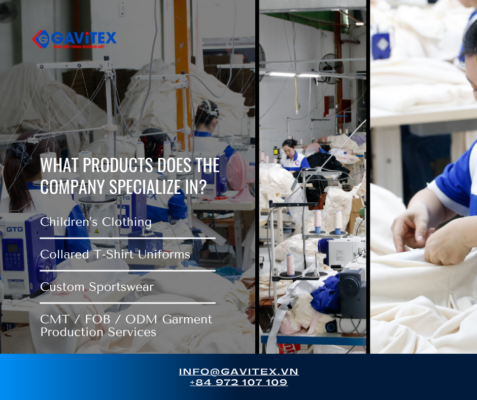 Labeling and packaging deserve attention alongside the garment itself, especially for brands planning to sell internationally. Care labels typically need to include fiber content, washing instructions and, depending on the destination market, country of origin. Packaging choices, from poly bags to folded presentation and hangtags, also affect unit cost, so it helps to decide on these details before finalizing a quotation rather than adding them as a last-minute request once pricing has already been agreed.
Quality Control Checkpoints Worth Knowing
Rather than one inspection at the very end, quality control in garment manufacturing usually spans multiple checkpoints — incoming fabric, mid-line production and a pre-shipment review. Asking a manufacturer to describe their QC process, and whether third-party inspection is available, gives a new brand a clearer picture of what to expect before committing to a full production run. This is particularly relevant for a first order, where the brand has no track record with the factory yet and cannot rely purely on past experience. Keeping a written record of what was agreed at each checkpoint also makes it much easier to resolve any disagreement later, since both sides can refer back to the same documented standard instead of relying on memory.
Common Mistakes New Brands Make at This Stage
Looking back at where first orders typically go wrong, a handful of avoidable issues show up far more often than the rest. Approving a sample too quickly, without checking stitching, fit and fabric hand against the original brief, often leads to a bulk order that does not match expectations. Slowing down at the sampling stage, even if it delays launch by a week or two, is almost always cheaper than reworking a finished bulk order.
Communication cadence is worth setting up front as well, particularly when working across time zones. Agreeing on a regular check-in schedule, whether that is a weekly update message or a call at key production milestones, prevents long silent gaps where a brand has no idea whether a sample is still in progress or already sitting finished in a warehouse waiting for shipping instructions.
A Practical Checklist Before Contacting a Manufacturer
- Write down the garment type, target retail price and who the product is for
- Draft a tech pack, even a basic one, before requesting a quotation
- Get clear numbers on MOQ, sampling cost and production timeline before committing
- Ask for real fabric samples rather than judging material from images
- Clarify the factory’s quality control process and inspection options
- Compare the sample to your original spec sheet point by point
It is also useful to ask a prospective factory about the range of order sizes it typically handles, rather than assuming every workshop can comfortably manage both a small first run and a much larger repeat order later on. Some factories are set up primarily for high-volume bulk production and treat a small private label order as a low priority, which can mean slower responses and longer queues for sampling. Others are built specifically around smaller, more flexible runs and are used to guiding first-time brands through the process step by step. Asking directly about typical order sizes, and requesting a few examples of past private label clients if the factory is willing to share them, gives a much clearer picture than pricing alone.
How to Evaluate a Manufacturing Partner for Long-Term Growth
The first order matters, but most brands are really looking for a partner they can grow with over several seasons, not just a one-time production run. A manufacturer that is transparent about delays or fabric shortages, even when the news is not ideal, tends to be a better long-term partner than one that avoids difficult conversations. It is also worth asking whether the factory has experience scaling an order from a small first run into larger repeat production, since not every workshop is set up to grow with a brand at the same pace.
Rather than expecting perfection on the first try, it is more useful to judge a factory on how it responds when something does not go exactly as planned. Brands that build in a buffer for revisions, both in timeline and budget, tend to have a smoother launch than those expecting everything to go exactly as planned on the first attempt. Keeping detailed notes on what went well and what did not during the first order also makes the second order noticeably smoother, since both sides start from a shared understanding rather than from scratch.
 Conclusion
 Conclusion
None of this preparation guarantees a perfect first order, but it substantially reduces the number of things that can go wrong along the way. A clear product brief, a workable tech pack, realistic expectations around MOQ and lead time, and attention to sampling and quality control are the factors that consistently separate smooth first orders from frustrating ones. Individually, these steps are simple; the value comes from doing them in order and not skipping ahead to save a week.
A private label clothing manufacturer Vietnam can help new brands develop products under their own label while managing sampling, materials, trims and bulk production.
Order now / Get a quote: +84 972 107 109